Soil Consistency
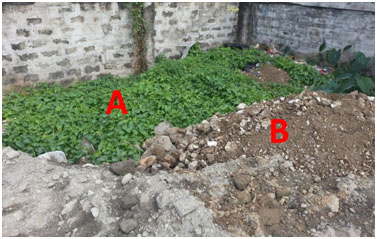
The consistency of soil type should be seriously observed during the dumping of filling materials in the area of construction or rehabilitation. The ground compaction process and ground stability will be affected based on type of soil.
Use of organic soil for base course:
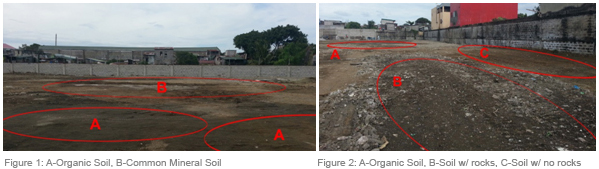
Organic soils have a different criteria compare to common mineral soils. Organic soil is difficult to deal with due to its high compressibility and poor strength. Looking at the case study of an actual area, proper soil mixing method was not applied as there are areas where organic soil was concentrated, and areas that have only common mineral soil present (Figure 1). The consistency of soil type is crucial to establish soil strength and ground resistance as opposed to what was already done in the actual site (Figure 2).
Use of broken concrete for top soil:
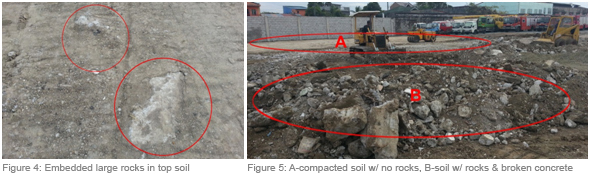
During construction of building foundations, a run-in with substantial large rocks embedded in the top soil will pose as a physical obstacle and possible damage to pile drivers when boring/ excavating the depth requirement for building foundation (Figure 4). The levelling of ground will also be affected due to the different reactions of soil to compaction/compression as there are areas where soil is mixed with broken concrete, and areas that don’t have broken concrete at all (Figure 5), thus resulting to uneven plane (excessive ground differential deformation) when ground settlement occurs. Uniform vertical ground settlement can be achieved through consistency in the soil type/material being used for filling.
Note: The following actual case study was conducted by BPMJ Group when it was asked to assess the ground improvement operation in preparation for a construction project in Valenzuela City.